


Blood sugar balance and nutrition can feel confusing with all the mixed messages out there. In this blog post, we’re answering some of the most common diabetes questions we get as registered dietitians and diabetes educators, covering topics like managing blood sugar, dealing with cravings, meal prep, and understanding how factors like stress and sleep play a role. We also recently recorded a podcast episode diving deeper into these questions, so if you love a detailed discussion, check that out here.
Are you living with diabetes or prediabetes and want support from a Registered Dietitian Nutritionist covered by insurance? Take our intake quiz to sign up for 1:1 nutrition counseling with our culturally humble, weight-inclusive Diabetes Dietitians. Our 12-week program helps you lower your A1c and improve your relationship with food. Most insurance patients pay $0 out of pocket! Start your journey to better health today.
Now, let’s break down some of the most common concerns we hear from our community and share practical ways to support balanced blood sugar and overall well-being.

Your Nutrition & Diabetes Questions Answered
What are some good snack options that won’t spike blood sugar?
Snacks can be a great tool for managing blood sugar, but balance is key. Instead of reaching for carbs alone, try pairing them with protein, fiber, or healthy fats. Think greek yogurt with berries and nuts, crackers with hummus or cheese, or fruit with almonds or walnuts. Even if you’re craving something sweet like chocolate, pairing it with nuts can help slow the blood sugar response. Aim for at least five grams of protein in your snack to stay full longer and keep levels steady.
How can I manage blood sugar with PCOS?
Many people with PCOS struggle with blood sugar fluctuations due to insulin resistance. We recently recorded an in-depth podcast episode on PCOS with our resident hormone expert, Nikki Saheb, so be sure to check that out. Some key tips to consider are to prioritize protein, fiber, and healthy fats at meals to prevent glucose spikes. Strength training at least twice a week is incredibly beneficial, sometimes even more so than cardio for improving insulin sensitivity. Movement throughout the day also plays a powerful role. Something as simple as a post-meal walk or a few squats can help lower blood sugar. Research shows that post-meal activity, especially within three hours of eating, can significantly reduce blood sugar spikes. One review even found that moderate-intensity aerobic activity for 45 minutes or more after meals reduced daily hyperglycemia by up to 65 percent.
Beyond diet and exercise, stress and sleep play massive roles in blood sugar regulation. If you’ve ever worn a continuous glucose monitor (CGM), you might notice spikes on days when you’re stressed or sleep-deprived. Managing stress and prioritizing rest can be just as crucial as other lifestyle factors. In fact, research shows that both poor sleep quality and sleeping too little or too much are linked to higher A1c levels in people with type 2 diabetes, highlighting that both how long and how well you sleep can impact blood sugar.
How do I handle late night cravings without feeling guilty?
Here’s another top diabetes question we get. Cravings, especially at night, are often tied to under-eating earlier in the day. If you find yourself ravenous at night, take a look at your overall intake. Are you getting enough protein, fiber, and healthy fats during the day? Consistently nourishing yourself can help curb cravings naturally.
Feeling guilty about food choices often leads to restriction, which only fuels stronger cravings. Instead of eliminating the foods you enjoy, try pairing them strategically. Love chocolate? Have it with nuts. Craving something crunchy? Pair crackers with cheese or hummus. Eating in a way that supports blood sugar doesn’t mean giving up the foods you love.
What are easy and affordable ways to include more fiber in my meals?
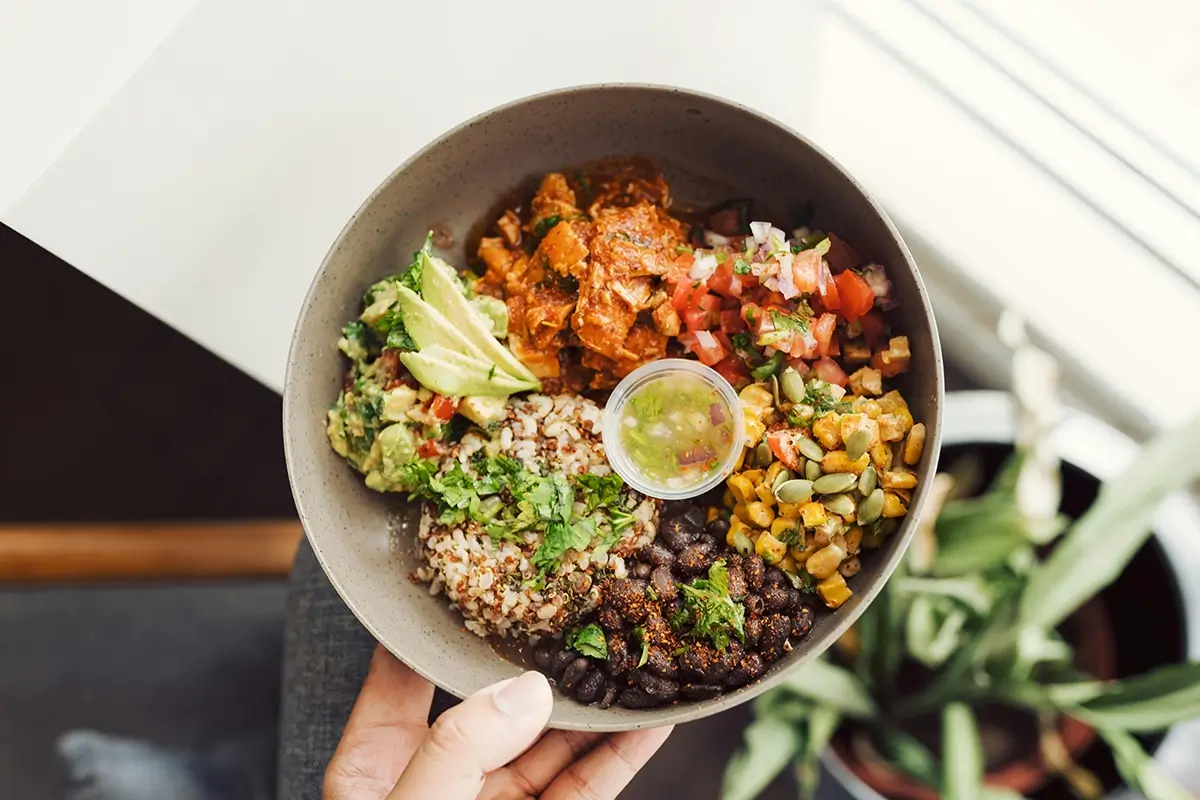
Fiber plays a crucial role in blood sugar balance, digestion, and overall health. If you’re looking for simple and budget-friendly ways to increase your fiber intake, try these options:
- Using frozen or canned beans and lentils in meals aim for at least ½ cup a few times a week
- Adding chia or flax seeds to smoothies, oatmeal, or yogurt
- Choosing frozen berries, especially fiber-rich options like raspberries
- Opting for frozen or pre-chopped veggies to make meal prep easier
What are some simple meal prep strategies for busy schedules?
Not everyone has time to cook elaborate meals, but simple meal prep can make balanced eating easier. Try batch-cooking proteins like chicken, tofu, or salmon for easy grab-and-go meals. Roasting a big tray of vegetables or having pre-chopped veggies on hand makes assembling meals faster. Frozen brown rice or whole grains can be a lifesaver when time is tight. And if all else fails, picking up a rotisserie chicken and pairing it with simple sides is a great shortcut.
Why do I feel hungry shortly after eating?
If you find yourself getting hungry shortly after meals, take a look at what’s on your plate. Meals lacking in protein, fiber, and fat tend to digest quickly, leading to hunger soon after eating. A piece of toast might not sustain you, but adding Greek yogurt, nuts, or eggs can make a big difference.
Another strategy is spacing meals throughout the day. If large meals leave you overly full but you get hungry quickly, consider having four to five smaller meals instead of three big ones.
How can I tell if stress is affecting my blood sugar?
Chronic stress raises cortisol, which in turn affects blood sugar regulation. If you notice more fluctuations, poor sleep, or heightened anxiety, stress could be a factor. In fact, research shows that long-term stress and depression can disrupt the body’s cortisol rhythm, flattening the natural daily curve, which is linked to increased insulin resistance and a higher risk of developing type 2 diabetes. Managing stress doesn’t have to be complicated. Practices like deep breathing before bed, listening to music, getting outside for a walk, or engaging in joyful movement can all help. If stress feels overwhelming, therapy can be a great tool. Platforms like Alma can help you find an insurance-covered therapist.

How do I manage Ozempic side effects like early morning hunger and nausea?
For those on Ozempic or other GLP-1 medications, waking up hungry at 4 AM or feeling nauseated in the morning is a common experience. If hunger strikes overnight, it could be due to an overnight drop in blood sugar. Try adding a balanced bedtime snack with protein, fat, and fiber like Greek yogurt with nuts or cheese and whole-grain crackers to help sustain you.
For morning nausea, keeping simple snacks like crackers by your bedside can help settle your stomach. If symptoms persist, a continuous glucose monitor CGM can help you track overnight fluctuations and make adjustments accordingly. Working with a dietitian can also provide personalized guidance.
Transcript
0:00
Welcome back to another episode of the Diabetes Digital Podcast.
We just finished up our HealthEquity series in the last few episodes.
0:09
So we thought it would be kind of a fun, lighter day-to-day where we just answer listener questions.
We had posted on Instagram on both our Food Heaven platform as well as Diabetes Digital to get
0:25
questions for you guys on, you know, how to manage blood sugar, anything really related to
nutrition.
0:32
And we got a ton of good questions that we’re gonna cover today.
And if we don’t get to your question or if you end up like listening and having more questions,
0:40
definitely DM us.
And if we get enough DMS, we’ll definitely do a second Q&A episode.
0:45
But some of the things that we’re gonna talk about today are what are some good snack options?
It won’t spike my blood sugar.
0:52
Somebody asked about PCOS and how they’ve kind of struggled with their blood sugar and what are some
realistic ways to manage that.
0:59
We’ll also talk about cravings at night, fiber and even Ozempic.
Somebody asked about, you know, they’re on Ozempic and they’re having a lot of nausea and waking up
1:09
with early morning hunger.
And like, what should they should do about that?
1:11
So it’s definitely going to be a really great and informative episode.
And make sure that you stay tuned until the end.
1:18
Welcome to the Diabetes Digital Podcast.
I’m Wendy.
1:21
And I’m Jess, and we’re best friends, registered dietitians and diabetes educators.
Through our telehealth platform, Diabetes digital.co, we offer accessible and personalized virtual
1:31
nutrition counseling for people with diabetes and pre diabetes.
Visit diabetesdigital.co that’s Co to book your first appointment.
1:39
We accept insurance and offer affordable self pay options.
Now let’s get into today’s episode.
1:47
This podcast is brought to you by Hero Bread is dietitians were always on the hunt for store bought
foods that we can confidently recommend to our patients.
1:56
But here is the catch.
Anything we recommend has to actually taste good.
2:00
Life is short and I both live to eat and eat to live.
That’s when Hero Bread reached out.
2:07
I’d seen them in stores, but I hadn’t picked anything up yet and they had sent a bunch of products
for us to try.
2:12
Now, my husband and I, we love food, and we were immediately hooked.
Hero Bread isn’t just tasty, it’s functional too.
2:19
Each serving has zero to 2G of net carbs, no sugar and four to 10 grams of protein depending upon
the product.
2:26
So the Hawaiian rolls, for example, which are new and I love.
They have 4G of protein per serving.
2:32
It’s perfect for managing blood sugar or adding more protein while eating the bread you love.
Their tortillas are a new favorite in my house.
2:39
My husband and I both love using them to make quesadillas as quick snacks.
I’m a big quesadilla girl.
2:45
I’ve also been using their bread for sandwiches.
I love making a sandwich for lunch because it’s easy and it’s filling.
2:52
But I am picky about bread.
It has to be the best part.
2:55
And here’s the thing.
Sometimes breads with health claims tend to be dry and disappointing.
3:00
But not this one.
Hero bread is moist, chewy, and really truly satisfying.
3:06
Their hamburger buns are also perfect for my vegetarian patties, and the extra protein helps me hit
my daily protein goals.
3:13
Now, whether you’re looking to manage your blood sugar or you just want to enjoy a delicious bread
option with added protein and prebiotic fiber, Hero Bread is a simple and tasty option.
3:24
Ready to give it a try?
Visit hero.co to shop their full lineup and use our special coupon code DD10, that’s DD is in
3:32
Diabetes Digital 10 to get 10% off at checkout.
And don’t forget, they also offer free shipping for orders over $50.
3:40
That’s hero HE ro.co.co.
Now on to the episode.
3:46
All right, so the first lesson or question is what are some good snack options that won’t like my
blood sugar?
3:52
And similar to meals with snacks, you want to try to have a good balance of carbs with protein,
fiber, and fat.
4:01
Of course, it’s not going to be as planned and elaborate as a meal, but it could be something super
simple.
4:08
Like if you’re having Greek yogurt, you’ll pair it with berries and nuts.
Or if you’re gonna have crackers, pair it with hummus or cheese.
4:16
Or if you’re gonna have a fruit, pair it with almonds or walnuts, things like that.
Just like thinking about snacks and pairings versus just like having a piece of fruit.
4:27
Or I don’t know, what are some other goats who’s like having dried fruit or having some chocolate.
Even with chocolate, if you enjoy chocolate you can have it with some nuts to make it a little bit
4:38
more balanced.
And I would recommend going for snacks.
4:41
I have at least 5 grams of protein and also some fiber so that that way you feel a little more
satisfied and your blood sugar levels are more steady throughout the day.
4:51
Yeah.
OK.
4:52
Our next question is about PCOS and it’s very interesting because so many people do struggle with
PCOS and actually 10% of our clients right now with Diabetes Digital have PCOS because that does put
5:07
you at more risk of pre diabetes, type 2 diabetes.
So we thought this would be a good question to include and they said I have PCOS and really struggle
5:15
with managing my blood sugar.
What are some realistic ways to help me keep my blood sugar in balance?
5:22
Now, the first thing I’m going to say is we just recorded an incredible podcast episode on this
where you can go so much more in depth.
5:30
This episode is with our wonderful dietitian, Nikki.
She’s our resident like hormone and PCOS expert.
5:36
So definitely check that out.
Just Google diabetes digital podcast PCOS Nikki.
5:42
And if you can’t find it DMS on Instagram, we’ll we’ll give it to you.
But some of the key takeaways are that a, yes, PCOS does increase your risk of, like we said, pre
5:54
diabetes and diabetes because you tend to have a little bit more insulin resistance.
And so it’s really key to focus on balancing your meals with that protein, fiber and healthy fats,
6:05
as Wendy mentioned, so that you minimize your kind of blood glucose being on a roller coaster.
Also strain training is so important for PCOS.
6:14
There is research to support this.
It can be really helpful in managing blood glucose, sometimes even more health than cardio because
6:22
some often people will just focus on cardio and not enough on strength.
But make sure you’re getting at least two days of full body strength training in and then walking
6:32
after meals can really help to improve insulin sensitivity.
And just like some practical tips, let’s say you like can’t even make it for a walk right?
6:43
Like I’ve seen studies that suggest even doing squats can be helpful because I also, you know, have
a history of pre diabetes and I’m really trying to do these tools and things that we talk about.
6:56
So sometimes if I can’t go on a walk after meal, I’ll just do like 10 or 15 squats.
And I will also try to break up like that physical activity throughout the day as well.
7:06
So, you know, sometimes we don’t have like an hour to do a walk in the morning, but maybe you just
do 5 minutes like walking around the block a few times a day or you know, take breaks and do squats
7:18
a couple times a day like that can be really helpful too.
I also want to point out that we, we think that things like PCOS and diabetes are all about what we
7:28
eat and exercise, but truly stress and sleep play such a big role and they have a really huge impact
on your blood sugar.
7:38
Like I’m sure if you were to wear a continuous glucose monitor, you will notice that on the days you
have less sleep or the days you are more stressed.
7:47
And that stress can come not only just from, you know, day-to-day stress, but stress on the body,
like being sick.
7:53
I noticed that my blood sugar is higher.
So really trying to prioritize the rest.
7:59
It’s a broken record, but these things really do make a difference.
Yeah.
8:04
And I was just thinking like, with the squats and things like that, especially for those of us who
are like just sitting all day, I have to like, remind myself because I can like, just sit at my desk
8:16
for hours in front of my computer.
And I’m like, Oh, my God, my back hurts.
8:20
And it’s like, I haven’t gotten up at all.
And so especially if you have like, those types of jobs where you’re just like in front of a
8:27
computer, try to time yourself, like maybe it’s like every 30 minutes to an hour, you’re getting up,
you’re stretching, you’re doing squats, you know, you’re moving in some kind of way just to get that
8:37
blood circulating.
And it just feels good.
8:40
You know, it gives your eyes a little bit of a rest as well.
Yeah, I have a tip for that that I, my friend, our friend Marley put me on to.
8:47
It’s called a Pomodoro timer.
Have you heard of this?
8:52
Oh, I haven’t, no.
Oh my God.
8:54
So it’s a style of like focus and taking breaks.
I think it works really good with like ADHD brain too because you can get hyper focused and like
9:03
Wendy said, you don’t get up for hours.
So now what I I have a reminder on my calendar in the morning to put on the Pomodoro timer because
9:11
if I don’t put it on it doesn’t work.
So you just go on YouTube and you Google Pomodoro timer.
9:17
I think traditionally it’s like 25 minutes of focus with a 5 minute break, but I find that I do
better with like 45 minutes of focus or 50 minutes of focus with a 10 minute break.
9:28
You can do Pomodoro timer timers where it’s like playing lo fi music and then after that like 4550
minute mark, it starts like beeping on you.
9:36
And then that like triggers me to like, OK, take a break.
And it if it really does work and it makes it so like that’s when I do like my 5 minute walk breaks
9:45
because otherwise, like there’s no way I’m going to get up every like when like every 30 minutes to
an hour on my own.
9:51
Yeah, yeah, I I like that.
I think that’s more realistic too.
9:54
Like 50 minutes I feel like sounds about right for me, ’cause every 30 would just be a lot.
I’m like, OK, I’m not doing anything.
10:02
I know I’m like, oh, it’s it’s too much.
Yeah, for sure. 50 is is a good ’cause it’s like just focus on one thing for 50.
10:09
You get so much done.
Take a break for 10, whatever it is 10/5 and then move on.
10:14
Yeah, that’s good.
All right.
10:16
So the next question is how do I manage cravings, especially at night, without feeling guilty?
And the first thing that I’ll address is the guilt part, like having guilt around food that ends up
10:28
in restriction is only going to make those cravings stronger.
So it’s good to allow yourself to eat these foods that you’re saying you feel guilty about.
10:39
It’s all about how much you’re eating it, the timing.
What are you pairing it with?
10:43
What are you having before?
Are you having after?
10:46
Are you under eating during the day, right?
Because with cravings too, it’s like if you’re restricting, restricting, restricting, then your body
10:53
is going to crave foods that are easily digested and that are going to bring your glucose up very
quickly.
10:58
So usually that’s why a lot of people crave carbohydrates, especially like simple carbohydrates.
So you have to make sure that you are properly nourishing throughout the day.
11:06
You’re eating at least three meals that are well balanced with different macro nutrients.
It has protein, it has fiber, it has fat, and also you can have snacks in between and you can have a
11:17
snack before bed.
Like cheese and crackers are good because they have a little bit of protein in there and some
11:22
carbohydrate.
You can also do like fruit with almond butter or peanut butter or something like that.
11:29
Like eating less is probably going to make your cravings worse.
So just keep that in mind.
11:36
Just make sure that you are eating enough.
And I have seen that when people start incorporating more food regularly into their day, those
11:43
cravings are not not as dominant as they used to be.
Yeah, that is very true.
11:51
So our next question is about fiber and we love fiber and they asked like what are some easy and
affordable ways to include more fiber into meals?
12:01
I love this question because we often overlook fiber as like a really important nutrient.
I I feel like it’s one of the most important, especially for blood sugar regulation.
12:12
People often think it’s about like cutting out carbs, but The thing is when you cut out carbs, you
also are cutting out fiber for the most part.
12:21
So I recommend really leaning in on frozen or canned.
So frozen beans, canned beans, canned lentils, those are really budget friendly and easy ways to add
12:34
to meals is like kind of my favorite thing.
And beans are such a great source of fiber.
12:38
So even trying to get like A at least a half a cup of beans, like 3 * a week is really going to be
good for you.
12:46
Also chia seeds and flax seeds, those are two things that I try to buy sometimes in bulk even like
at Costco.
12:53
You can toss those into your yogurt, into your smoothies, into your oatmeal and those are another
really good source of fiber that’s going to bulk up the meal.
13:02
Also pre chopped vegetables can be nice.
Like sometimes pre chopped is a little bit more expensive, but when I tell you I am so much more
13:11
likely to add those veggies if they’re pre chopped then if they’re not like I’ve even been doing the
pre chopped garlic because it’s just easier these days.
13:22
Frozen too because frozen tends to be like pre chopped as well.
Even things like frozen spinach, you can easily mix those into eggs, pasta, different stir fries and
13:34
really boost your fiber intake that way.
And don’t shy away from supplements if you need them.
13:40
I take, and I say this all the time, like the partially hydrolyzed war gum fiber supplement.
It’s PHGG, but the brand name would be like a Benefiber that is PHDG kind of based or like I think
13:55
it’s called like healthy choice healthy.
I think it’s like healthy fiber.
13:58
But those are also really good sources.
And then my last favorite way to get fiber in is frozen berries.
14:07
So like raspberries, for example, I believe have like 7 grams of fiber per cup.
So I try to add a cup of frozen raspberries, blueberries like mixed berries into my smoothie every
14:17
morning.
And because they’re frozen, they’re a little bit more affordable and I’m able to get a lot of fiber
14:22
were with that meal.
Yeah, and you can always add things like flax seeds, chia seeds, psyllium has like you can blend
14:30
that into your smoothies as well for an added boost of fiber.
And I also like blending walnuts, by the way.
14:37
Oh yes, if.
You enjoy, it actually doesn’t even taste like anything.
14:41
I was going to save you enjoy the taste of walnuts, but when you blend it, it just makes it like
really creamy.
14:45
So that’s something you can do as well.
OK, next question.
14:48
What are some simple meal prep strategies for busy schedules?
Is a good one?
14:54
OK, so number one, I would say bad cook.
So things like your chicken, your salmon, your tofu, you can cook them in advance.
15:01
I even sometimes boil my eggs for a few days and then I just kind of grab them and go.
You can roast a bunch of vegetables for the week, especially in the winter.
15:09
I do this a lot.
And then I’ll toast it in like sous or I’ll just like heat it up and have it as a side.
15:15
You can also assemble things like trail mix, you know, your cheese sticks, your hummus and crackers,
like just having those things ready to go so you can grab them, especially if you’re, if you’re like
15:25
you have to commute to go to work.
Just mention like the pre cut veggies, the frozen veggies.
15:31
One thing that I really like is like the frozen brown rice in Trader Joe’s because you literally
like you just throw it in the microwave and that’s it.
15:39
And then you just enjoy it with like your protein or whatever.
Something that Gabe and I were doing a lot too when we were traveling was like, we would just buy a
15:46
whole roasted chicken at the supermarket.
And I mean, it’s just like so affordable and it lasts for the whole week.
15:54
And we would like, just cut that up and enjoy it in like quesadillas or like with rice and, you
know, just kind of like mixing it up so that it’s not like you’re having the same thing every single
16:04
day.
Great tips.
16:06
Somebody asked about feeling hungry shortly after eating.
That is a really good question too.
16:12
This can happen to me as well.
And they’re asking like how do you stay full longer and keep your blood sugar stable.
16:19
So it’s like a very tricky thing with this because I’m someone who gets full easily but then I get
hungry easily too.
16:27
Like I get full quickly but then I get hungry quickly.
So I have found honestly, because I don’t want to eat to the point of like stuffing myself to
16:36
potentially stay full longer, it’s like really uncomfortable.
However, I also don’t want to get hungry and then wait till the next meal.
16:45
So I find that having like four or five meals a day for me works really well so that it’s like I,
you know, I feel comfortably full.
16:54
Like, you know, on the fullness scale, I’m like a seven or eight if I get hungry again in like 3
hours, like it’s time for the next meal.
17:01
So I find that works really well, even better better than snacks for me because snacks don’t really
do much for me.
17:07
I just would rather have a meal.
So though that would be like what I have found worked.
17:12
But just in general, I would say it could also be that you’re not adding enough of variety of macro
nutrients.
17:19
So definitely adding more protein, more fiber to your meals.
You can add things like Greek yogurt, nuts, eggs, beans.
17:27
Those are all really going to help.
Even me now, like if I, I have a oatmeal bowl is like a second breakfast and I will make the
17:35
oatmeal, but then I’ll also put Greek yogurt in it to make it more filling.
And I’ll also put a scoop of protein powder in it to add more protein to have that satiety last, you
17:46
know, a couple hour or a few hours.
So just thinking about what you can add.
17:51
And then like I said, looking at at that balance, if you’re just having one macronutrient, like
let’s say you’re just having carbs or like you’re just having a piece of toast, that’s likely not
18:01
going to keep you full.
But the more that you add, it’s going to help.
18:05
And I like to think of it as like, if I have three different things on this plate, and this is not
scientific.
18:11
This is just like my own dietitian thinking, but I’m like, OK, if I’m eating a breakfast, right, and
I have three different portions of macro nutrients, like for me that tends to keep me full for three
18:23
hours.
If I add a fourth macro nutrient, I might stay full for five hours.
18:29
If it’s a snack, if it’s one thing, like a piece of toast, one macro nutrient, a carb, I might stay
full for an hour.
18:36
Or if it’s two, it’s like 2 hours.
So if it’s like a, you know, Greek yogurt and berries, like that might last me two hours.
18:41
So that kind of helps me just kind of correlate the amount of things on my plate to how long it’s
going to keep me feeling sustained.
18:48
And so if I want to feel sustained longer, I’m going to need more.
If it’s just a quick snack, I’ll need less.
18:53
Okay, next question is how can I tell if stress is affecting my blood sugar and what can I do about
it?
18:58
So stress will raise your blood sugar because of the cortisol spike.
And so if you’re noticing that you’re having like a lot of fluctuations, you’re not sleeping well,
19:11
you have a lot of anxiety, this is probably a sign that you’re stressed and that it is probably
affecting your blood sugar, especially if it’s chronic, right?
19:19
Because like sometimes something happens, it’s like an acute stressor where it happens.
And then you’re fine, it goes away.
19:25
But if you’re like consistently exposed to stressors and you don’t have the right coping mechanisms
and place, then it’s definitely going to affect your blood sugar.
19:37
And so some things that might help are like just trying to practice some deep breathing, especially
before going to bed, because that can also help with like improving your sleep quality.
19:46
Also like going on a walk, listening to music, working out is also really helpful when it comes to
relieving stress.
19:55
So trying and it does have to be going to the gym.
It could be like any kind of movement routine that you find enjoyable and being practical.
20:03
Like even if you can just do it for a few minutes a day, that can help.
And there’s always getting a therapist, if you’re able to feel like that is, you know, that really
20:12
helps to create a good foundation for like how to create coping mechanisms for stress.
Yeah.
20:17
Speaking of getting a therapist, I really like the website Alma.
It kind of pairs you with therapist and they take insurance.
20:27
And so I found my last two therapists, like a couple therapists as well as like individual with that
app and they’ve been really, really good.
20:37
They’re kind of independent contractors, it seems, and they just do the insurance with their
providers.
20:42
And so it’s nice because they have very flexible schedules and you still have like your hour
session, but they take insurance, which is great.
20:49
So our final question is about Ozempic.
And the person says that they sometimes wake up hungry at 4:00 AM or they wake up nauseated at 6:00
20:58
or 7:00 AM.
And is this a sign of low blood sugar?
21:02
And I think a lot of people who are on GLP ones can relate to this.
So we definitely wanted to include this question.
21:09
And actually many of our patients, because we are a clinic that does focus on like blood sugar
regulation, many of our patients are on Ozympic as Ozympic as well, and they have similar struggles.
21:21
And so a couple of things to consider #1 is that early morning hunger.
That could be due to an overnight drop in blood sugar, definitely, or it could be not eating enough
21:34
before bed.
So having a balanced bedtime snack like protein, fat and fiber can really, really help.
21:41
And this has been the case for me too, because sometimes I will wake up in the middle of the night
hungry.
21:45
And when I have like a snack like we’re suggesting, it really helps so much.
So maybe if you go to bed at nine, try having that snack at like 8 or if you go to bed at 10, have
21:57
that snack at 91 that I found really works well.
And, and everyone’s different, so you can test it different things.
22:04
But having plain full fat Greek yogurt with a little bit of like nuts and a couple slices of banana
like that seems to really sustain me.
22:16
And then I don’t wake up as much.
And it kind of has a variety of those different food groups.
22:21
But other things that work really well are cheese and whole grain crackers or like a lot of our
dietitians might recommend, like a piece of toast with peanut butter.
22:31
That seems to work really well.
So just kind of test different things and see if that makes a difference.
22:36
Don’t be afraid to eat something closer to bedtime if it’s going to help you sleep better and not
wake up hungry because if you’re not sleeping, then that’s not going to be good for your blood sugar
22:45
anyways.
And then for the morning, nausea like this is definitely a common ozympic side effect.
22:52
But if it is paired with like shakiness, sweating or dizziness, that could also suggest low blood
sugar.
22:59
So you also might want to keep something small by your bedside, like some crackers just to kind of
settle your stomach in the morning and get your blood sugar up a little bit.
23:10
That can help.
And then to know for sure, like my first instinct was to say you might want to consider a continuous
23:16
glucose monitor to know if it’s definitely low blood sugar because that can show you like if your
blood sugar is dipping overnight or it’s fluctuating in the morning.
23:25
And then you can adjust your routine accordingly.
And if you want to work with a dietitian who can kind of help you navigate like getting a CGM and
23:35
like interpreting the data, definitely check out our diabetes digital dietitians because that’s
literally what we do.
23:41
We do take insurance and we work with, you know, people who have all the conditions that we’ve kind
of been talking about today.
23:48
So you can go to our website, diabetesdigital.co, and fill out our quiz to just see what your
coverage is.
23:54
So, you know, maybe working with a dietitian might be helpful, especially in this case.
All right, that wraps up our Q&A.
24:00
If you enjoyed this series, please make sure to share this episode with a friend or family member.
I know that we all have somebody in the family who can benefit from this information.
24:09
And definitely do not forget to rate and review this podcast on iTunes or Spotify.
I guess Spotify, now you subscribe on Spotify.
24:19
It really, really helps our podcast reach more people.
Yeah, and if you’re looking for personalized, culturally competent nutrition care, you can go to
24:27
diabetesdigital.co to work with one of our registered dietitians.
Thanks for being with us, and we’ll see you next time.
24:33
Bye.
Thanks for joining us for today’s episode.
24:37
If you’re interested in nutrition counseling with one of our expert dietitians to help improve your
pre diabetes or diabetes, visit us at diabetesdigital.co.
24:47
Also, if you found our conversation helpful, do us a favor and rate and review this podcast on
iTunes, plus share with someone who might find this helpful.
24:56
You can also connect with us on Instagram at Diabetes Digital dot.
Co and TuneIn every Wednesday for practical, inclusive and culturally tumble diabetes insights.
25:06
We’ll catch you later.
Bye.
© 2025 Spotify AB
Legal
Privacy
Cookies
Have more diabetes questions, or need expert support in managing blood sugar, PCOS, or insulin resistance? Our registered dietitians at Diabetes Digital are here to help.





Leave a Reply