




TikTok is flooded with blood sugar hacks. Apple cider vinegar before every meal. Cinnamon in everything. Eating your vegetables first, then your protein, then your carbs. Ice baths. Never touching a naked carb. We hear about all of them constantly: patients DM us about them, bring them up in sessions, and ask whether they should try them. In a recent solo episode of the Diabetes Digital Podcast, Jess went through the six biggest ones with a simple framework. Every hack gets one of three verdicts: legit, overhyped, or skip it.
Here’s the short answer: three of these blood sugar hacks have real science behind them, three range from mildly helpful to completely unproven, and none of them replace a plan built around your actual labs, your medications, and your life. But some are genuinely worth doing.
Are you living with diabetes or prediabetes and want support from a Registered Dietitian Nutritionist covered by insurance? Take our intake quiz to sign up for 1:1 nutrition counseling with our culturally humble, weight-inclusive Diabetes Dietitians. Our 12-week program helps you lower your A1c and improve your relationship with food. Most insurance patients pay $0 out of pocket! Start your journey to better health today.
Which Blood Sugar Hacks Are Worth The Hype?
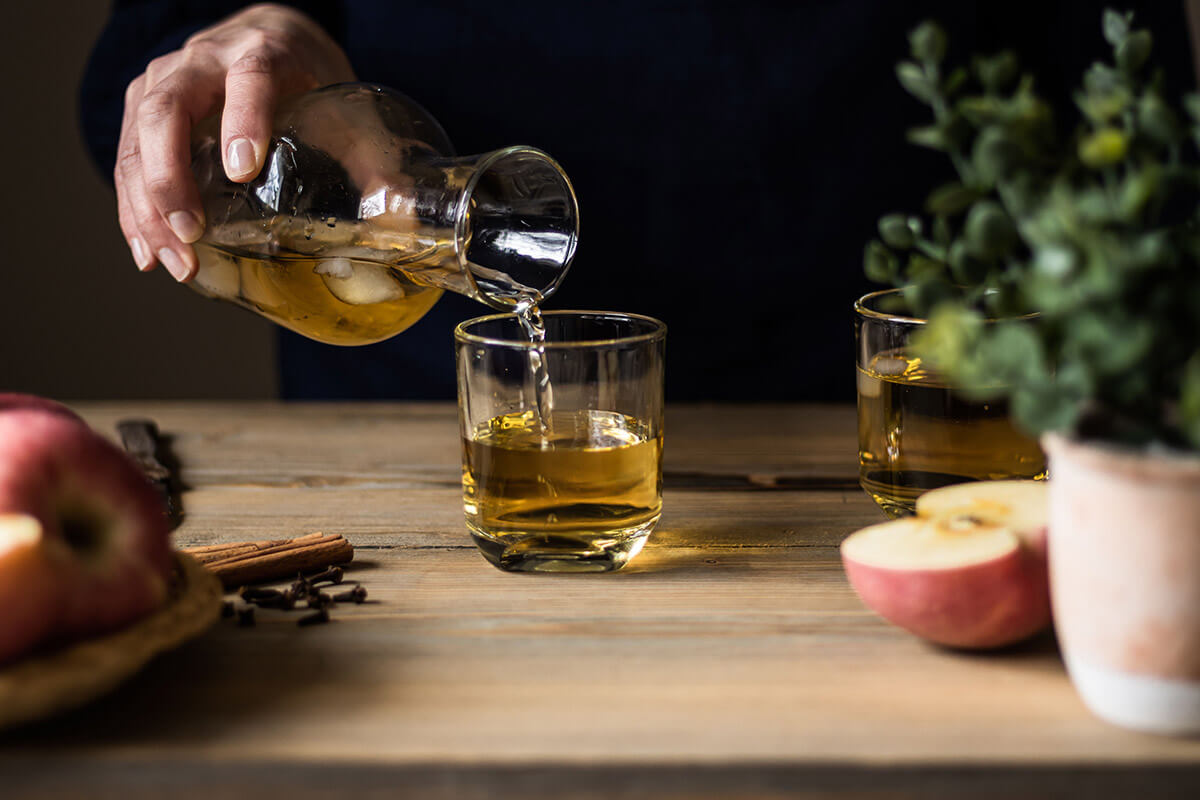
Hack 1: apple cider vinegar before meals
The claim: taking apple cider vinegar before a meal blunts your post-meal glucose response.
The evidence: there is some. A few small studies suggest that vinegar before meals may modestly reduce post-meal blood glucose (the rise in blood sugar after eating) in some people. The word “some” is doing a lot of work there. These studies are small, short-term, and the results are not consistent enough to call apple cider vinegar a meaningful blood sugar strategy.
The downsides are real too. Too much can damage tooth enamel, irritate the esophagus or stomach lining, and it can interact with certain medications including insulin. If you’re on insulin and you’re also throwing back shots of ACV before meals without telling your care team, that’s worth knowing.
Jess’s actual recommendation: if you want to try it, put it on your salad. Mixing vinegar into your dressing is a way to get the potential benefit without accidentally taking too much or not diluting it properly. You’re still getting the vinegar, you’re just eating it the way humans normally consume vinegar. A diluted tablespoon in water before a meal is also fine if you like it. But every meal, every day, as some kind of miracle strategy? Science doesn’t support that.
Verdict: overhyped. Mildly helpful for some people, but the TikTok version of this hack wildly oversells it.
Hack 2: the food order method (vegetables, then protein, then carbs)
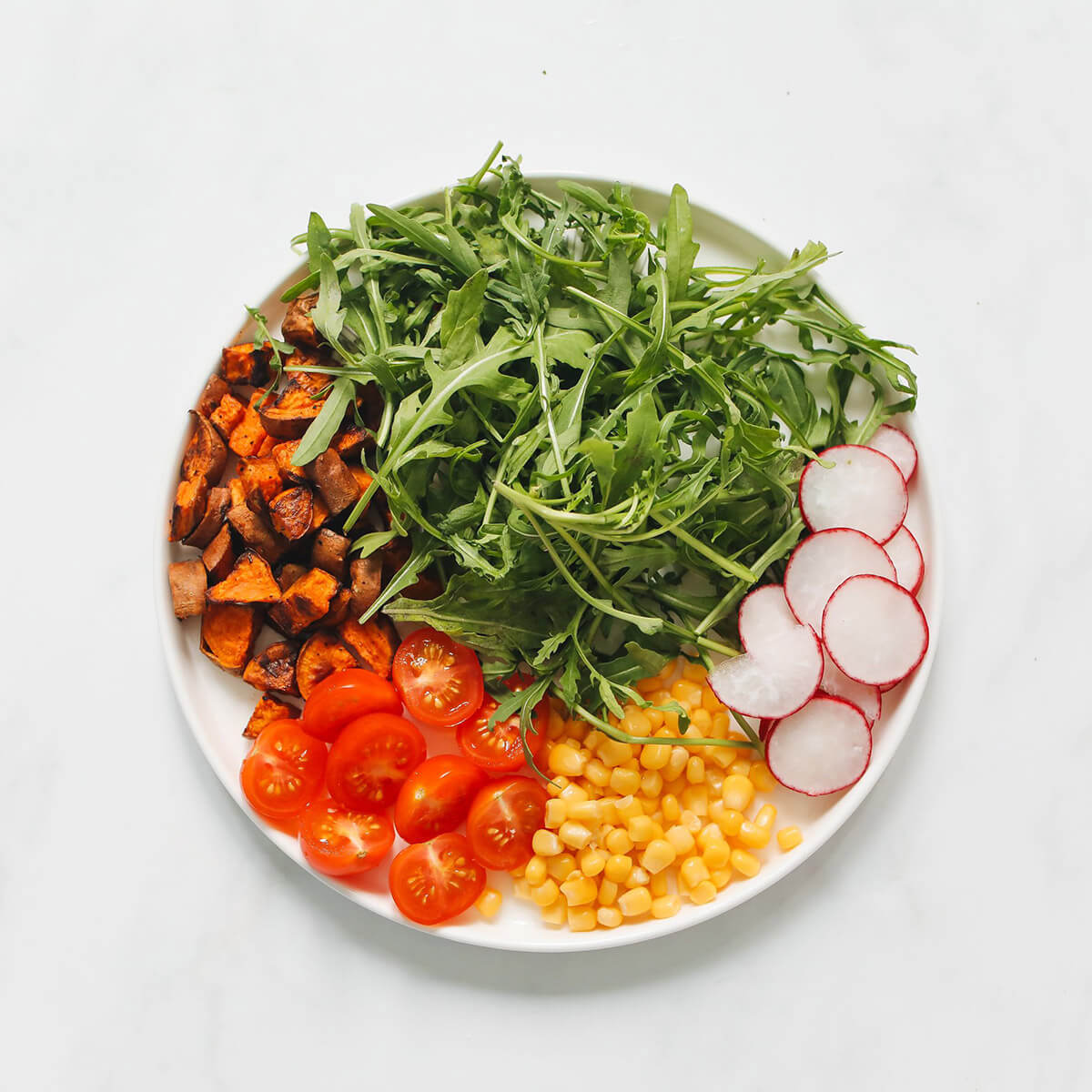
The claim: eat your vegetables first, then protein and fat, then carbohydrates last. This sequence reduces your post-meal glucose spike.
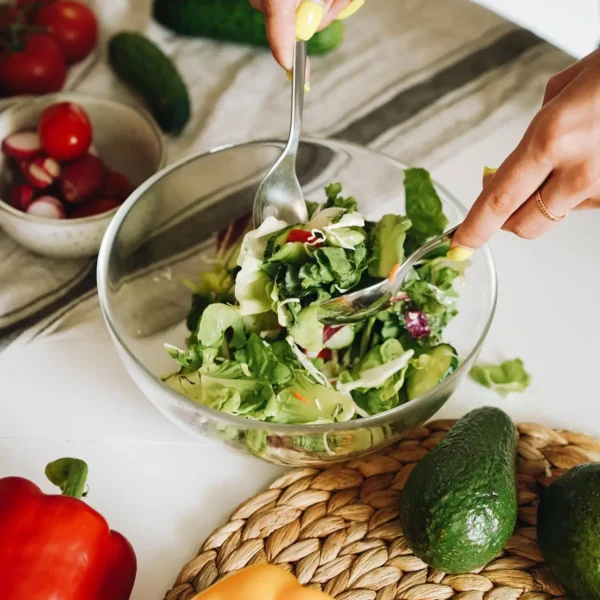
The evidence: actually, yes. Multiple studies suggest that eating fiber and protein before carbohydrates can significantly reduce post-meal blood sugar in some people. The mechanism makes sense: fiber and protein slow down digestion, which slows down how quickly glucose enters the bloodstream. And our dietitians see this daily: people who pair their meals and lead with fiber and protein have more stable glucose responses than people eating naked carbs alone.
Here’s Jess’s honest take though: most people are not eating their meals in a strict sequence. Nobody is sitting at the Cheesecake Factory timing their side salad fifteen minutes before their entrée. And that’s fine. The more practical version of this principle is not a rigid order. It’s eating all these foods together: vegetables, protein, fat, and carbohydrates on the same plate, at the same time, as part of the same meal. The food order concept is a useful mental model. It’s not a protocol you need to execute perfectly.
If you’re at a restaurant and you want to apply this, ordering a side salad first and eating it before your main is a reasonable, real-world version of the strategy. Beyond that, the most important thing is just that the protein, fiber, and fat are on the plate at all.
Verdict: legit science, wildly overprecribed. The underlying principle is real and dietitians have been teaching it for years. TikTok just gave it better branding and made it more complicated than it needs to be.
Hack 3: cinnamon in everything
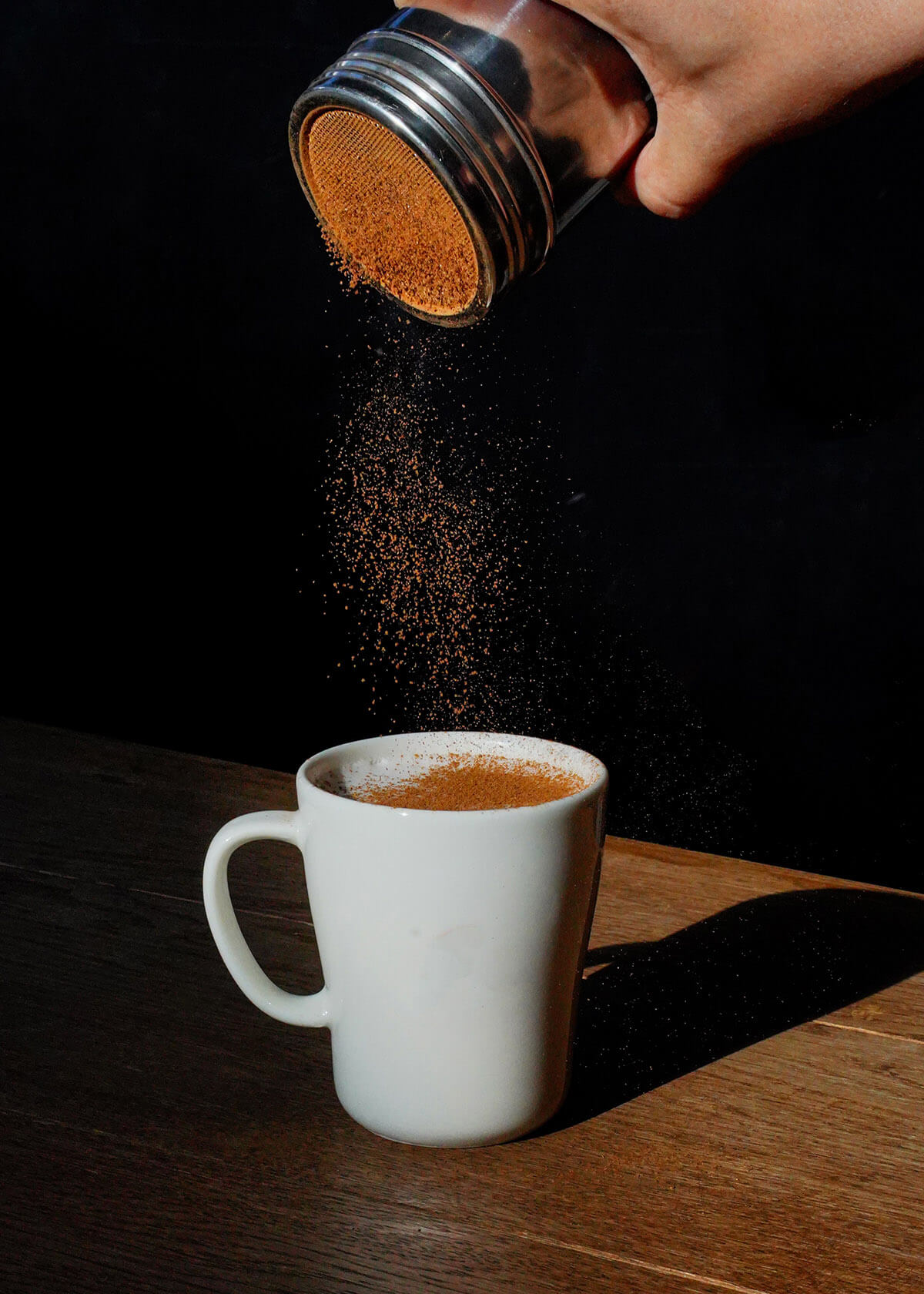
The claim: cinnamon naturally lowers blood sugar.
The evidence: mixed, and Jess has been following this one for a long time. She wrote a paper on cinnamon and blood sugar in graduate school. Some studies show a small effect on fasting glucose. Other studies show no meaningful effect at all. When there is a benefit, it’s small and inconsistent. And the type of cinnamon matters: cassia cinnamon (the most common grocery store variety) contains coumarin, which can be harmful to the liver in large amounts over time.
So: add cinnamon to your oatmeal, your yogurt, your coffee. It tastes good, it’s not going to hurt you in normal food amounts, and there’s a chance it provides a small benefit. But spoonfuls of cinnamon every day as a blood sugar strategy? That’s not what the evidence supports and it could actually cause problems.
Verdict: overhyped. Enjoy it as a food. Don’t rely on it as a clinical tool.
Hack 4: a 10-minute walk after meals
The claim: walking for 10 minutes after a meal improves your post-meal blood sugar.
The evidence: this one is absolutely real. Multiple studies confirm that walking for even 10 to 15 minutes after eating can significantly reduce post-meal glucose. The mechanism is direct: your muscles use glucose for energy when they move, which pulls glucose out of the bloodstream. More movement after a meal means more of that glucose gets used rather than sitting in circulation.
Jess put it plainly: this is one of the most effective simple strategies on the entire list. It’s free, it’s practical, and the research behind it is stronger than any of the other hacks on here.
But here’s why people don’t lean on it: a 10-minute walk after dinner isn’t sexy. It doesn’t feel like you’ve cracked some secret code. Apple cider vinegar feels like a hack. Sprinkling cinnamon on your coffee feels like a hack. Putting on your shoes and walking around the block for ten minutes after you eat just feels like… something your grandma told you to do. But your grandma was right.
Verdict: legit. Strongest evidence on this list. Make it a habit.
Walking 10 minutes after a meal is not as sexy as apple cider vinegar or sprinkling cinnamon. But when it comes to evidence, it has the most. — Jess, Diabetes Digital Podcast
Hack 5: ice baths and cold plunges for blood sugar
The claim: cold plunges improve insulin sensitivity (how well your cells respond to insulin).
The evidence: technically there’s something here. Early research has looked at cold exposure and how it may activate brown adipose tissue (a type of fat that burns energy to generate heat) which could temporarily increase glucose uptake. But “early research” is doing a lot of work. These studies are tiny. The effects are short-lived. And the jump from “interesting lab finding” to “practical blood sugar management tool” is a large one.
There’s also a real concern specific to women. Some doctors have noted that cold exposure can raise cortisol (the body’s primary stress hormone) and elevated cortisol worsens insulin resistance: the opposite of what you’re going for. For people already managing elevated glucose, adding a cortisol-raising practice to the routine is worth thinking carefully about.
If you love cold plunges and already do them, great. There may be other benefits. But as a blood sugar management strategy for someone with diabetes or pre-diabetes? The evidence isn’t there yet.
Verdict: skip it as a blood sugar tool. Interesting science, way too early and too impractical to recommend. And the cortisol concern is real.
Hack 6: never eat a naked carb
The claim: always pair carbohydrates with protein, fat, or fiber. Never eat carbs alone.
The evidence: solid. Pairing carbohydrates with protein, fat, or fiber slows digestion and reduces the size and speed of your post-meal glucose response. The combination helps keep your blood sugar more stable and keeps you feeling full for longer. This is not new information. Dietitians have been teaching this for decades. TikTok put a catchy name on it.
Now, “never” is strong. Eating a piece of fruit on its own is not going to cause irreversible harm. The practical version of this principle is: for most of your meals and snacks, especially when you’re managing blood sugar, make sure there’s protein, fat, or fiber alongside your carbohydrates. Not because carbs are bad. Because your glucose response to those same carbs will be meaningfully different when they’re paired than when they’re naked.
For people with diabetes or pre-diabetes specifically, this is one of the most consistently useful nutrition strategies in the toolkit. It works across cultural foods: rice with beans and protein, tortillas with eggs and avocado, dal with a side of yogurt, grits with cheese and salmon. The pairing principle applies everywhere.
Verdict: legit. Just repackaged. The TikTok name is new. The clinical advice is not.
The phrase ‘never eat a naked carb’ is very TikTok coded, but the underlying advice is real, and dietitians have been teaching this forever. — Jess, Diabetes Digital Podcast

The bigger picture: what TikTok blood sugar hacks can’t do
None of the blood sugar six hacks above, not even the ones that are genuinely legit, replaces a plan built around your specific situation. Your labs. Your medications. Your schedule. Your cultural foods. Your glucose patterns.
Knowing that walking after meals helps blood sugar is useful. But how much does it help your blood sugar specifically? Does it happen to land at the same time as a medication that needs food? Do your evening numbers already run higher from something hormonal or stress-related? A TikTok hack gives you a general principle. A registered dietitian helps you figure out how to apply it to your actual body and life.
The other thing worth saying: the hacks that get the most views online are not the ones with the most evidence. Apple cider vinegar shots are dramatic and shareable. A 10-minute walk after dinner is not. And yet the walk has significantly more research behind it. Social media optimizes for attention, not for clinical accuracy.
If your diabetes management strategy is currently based on TikTok, you deserve better. — Jess, Diabetes Digital Podcast
The trash advice hiding in the algorithm
The real problem with blood sugar content on TikTok is not that every single claim is wrong. It’s that the context is missing. Apple cider vinegar before meals gets presented as a universal fix, with no mention of medication interactions, no mention of the small study sizes, no mention of the tooth enamel issue. The food order method gets presented as a strict protocol to follow precisely rather than a general principle to apply flexibly. Ice baths get presented as a biohack for everyone when the cortisol effect is a genuine concern for people with insulin resistance.
Information without context is how people end up making decisions that sound clinical but aren’t. And for someone managing blood sugar with medication, that gap can matter.
The blood sugar hacks that actually work: a quick recap
To be direct about it:
- Post-meal walking (10 to 15 minutes) is the single most evidence-backed, practical strategy on this list. Free, proven, and requires nothing but shoes.
- Power pairing carbohydrates with protein, fat, or fiber works. It’s the core of how our dietitians approach blood sugar management across cultural foods and individual preferences.
- The food order principle has some real science behind it in its flexible form: leading with fiber and protein before loading up on carbohydrates. Don’t make it a rigid ritual. Just make sure the protein and fiber are on the plate.
- Everything else ranges from “probably fine in food amounts” to “not ready for primetime.”
Transcript
Hi, welcome back to another episode of the Diabetes Digital Podcast presented by Food Heaven.
Today it’s just me, Jess, and I’m going to be talking about TikTok blood sugar hacks because there’s so many out there and we’re going to make this fun.
0:17
So TikTok is absolutely flooded with blood sugar hacks like apple cider vinegar, cinnamon and everything, eating foods in a certain order, ice baths, never eating a naked carb, the list goes on and on.
And I know a lot of you are trying these because you DM us about them every week or we hear from our patients that they’re trying them.
0:36
So today I’m going to go through some of the biggest blood sugar hacks 1 by 1, and we’re going to look at the actual evidence and give you a very simple verdict.
So there are three different possible verdicts.
There’s legit, there’s overhyped and there’s skip it.
Are you guys ready?
0:52
Let’s get into it.
Welcome to the Diabetes Digital Podcast.
I’m Wendy.
And I’m Jess, and we’re best friends, registered dietitians and diabetes educators.
Through our telehealth platform, Diabetes digital.co, we offer accessible and personalized virtual nutrition counseling for people with diabetes and pre diabetes.
1:10
Visit diabetesdigital.co that’s Co to book your first appointment.
We accept insurance and offer affordable self pay options.
Now let’s get into today’s episode.
Hack one is apple cider vinegar before meals.
1:26
So the claim is that taking apple cider vinegar before a meal can blunt your blood sugar rise or your post meal glucose.
And technically there is some science here.
We actually did a podcast episode that included a nuanced take of the apple cider vinegar argument.
1:46
There are a few small studies that suggest vinegar before meals may modestly reduce post male blood glucose in some people, but those studies are small.
They’re also very short term and the results are not consistent enough to make this some kind of miracle strategy.
2:02
And the other thing is there are downsides.
So too much can damage your tooth enamel.
It can also irritate the esophagus or your stomach.
And it can interact with certain medications, including insulin.
So if you want to enjoy it diluted in a full glass of water, that’s totally fine.
2:19
Is it something that I would do before for every single meal?
No.
But one thing that I do recommend if people want to try this and see if it works, is I think a safer way to take it is having it on your salad, right?
Or like on your actual food, because it’s easier to take too much if it’s in water and not dilute it well enough.
2:38
But if you’re just mixing it in your salad dressing, that’s still a way to get the vinegar and it can still be helpful.
So the verdict is this is mildly helpful for some people, but wildly overhyped.
Hack 2 The glucose goddess infamous food order.
2:55
So the claim here is to eat vegetables first, then protein, then fats, then carbs last.
Now what’s the deal?
Is this actually grounded in real science?
So I will say that yes, there is some science there.
There are multiple studies that suggest eating fiber and protein before your carbohydrates can significantly reduce your post meal blood sugar in some people.
3:19
And the reason is possibly because fiber and protein slow down digestion, which slows down how quickly glucose enters the bloodstream.
And The thing is, this is not new science.
Dietitians have been talking about this strategy, especially of pairing your foods together for years.
3:38
I think social media just gave it better branding.
However, I will say that most people are not eating their foods in this order this way.
Like I like to think of it more as like like eat all these foods together versus like I’m going to have vegetables and then I’m going to wait 15 minutes and then I’m going to have protein and then I’m going to have fat.
3:57
And it like that’s just not a fun way to eat for most people.
I know that glucose Goddess talks about it as a veggie starter.
Let’s say you’re at Cheesecake Factory.
I might, if I was following this and I knew that it was helpful for me, like maybe I would have like my side salad first, right?
4:14
That might be a way I would do it versus, you know, I’m having a baked potato and I’m like separating everything out.
Like I’m having the cheese separate from the like, I just feel like that’s kind of getting a little disorderly.
So it’s really, you know, take it with a grain of salt, but there are some very small studies and there’s a, there’s just a couple of them that suggested this might be helpful.
4:37
OK, blood sugar hack 3 cinnamon in everything.
So the claim here is that cinnamon naturally lowers blood sugar, and this one gets repeated constantly online.
And the truth is, the evidence is actually kind of mixed.
I probably mentioned on this podcast before in grad school, I did a paper slash presentation on cinnamon and its effects.
4:58
And at the end of the day, there are some studies that show a small effect, but there’s other studies that show no meaningful effect at all.
And if there is a benefit, it tends to be small and inconsistent.
So what I might recommend for my patients, and we talked about this in our supplements episode, is sure, like, have a little bit of cinnamon on your oatmeal.
5:19
But like, I probably would not recommend so and start having spoonfuls of cinnamon every single day.
It can be harmful depending upon the type of cinnamon and the amounts.
So that’s where it’s like, yeah, let’s just add it to food.
And then there’s no chance of like doing too much.
5:36
The other thing is cinnamon tastes good and I love having it on things.
So the verdict on this one is it’s not necessarily harmful if you’re adding it to your foods.
But I don’t know that I would rely on this is like my number one blood glucose lowering strategy because it’s probably going to fall short.
5:54
OK, let’s move on to hack 4.
So this hack is a 10 minute walk after males will improve your blood sugar.
Now, is this true?
This one is absolutely real.
Multiple studies show that walking for even 10 to 15 minutes after meal can significantly reduce post meal glucose.
6:14
Why?
Because your muscles use glucose for energy when they move, so the movement helps pull glucose directly out of the bloodstream.
And what I love about this one is that it’s free, it’s practical, and there are a ton of studies to suggest that this works for most people.
6:30
So honestly, this is one of the most effective simple strategies on the whole list.
The verdict is it is absolutely legit.
And I will say the thing about The Walking is it’s not sexy.
Like walking 10 minutes after a meal is not as sexy as apple cider vinegar or like sprinkling on some cinnamon.
6:50
It doesn’t feel like you’ve, you know, cracked the code on this secret that’s going to cure everything.
And so that’s why I feel like we don’t lean on those basic things as much.
But when it comes to evidence, it has the most.
All right, so hack #5IS ice baths for blood sugar.
7:08
And I have to admit, this is not something that I had even heard of before until I was doing research for this episode.
But the claim is that cold plunges improve insulin sensitivity.
And the reality is technically there is some early science here.
7:27
So researchers have looked at cold exposure and how it may activate brown fat, which can temporarily increase glucose uptake.
But the research is still very early, the studies are tiny, and the facts are very short lived.
7:44
And so from a real life standpoint, most people are not going to manage their blood sugar by sitting in freezing water every morning.
But if you already love cold plunges, I know a lot of people.
Well, I don’t actually know anyone who does, but there seems to be people online who love cold plunges.
7:59
Great, go for it if that makes you feel good.
But is this going to be a blood sugar strategy?
I would say no.
The verdict here is this is interesting science but way too early and way too impractical to recommend.
Not to mention I have seen some docs say that the ice baths, like for women can just not be as great because they can raise cortisol which raises our stress response which will have the opposite effect.
8:27
So we really have to take a lot of these things with a grain of salt.
OK?
And then hack number six is never eat a naked carb.
So the claim here is that we should never eat carbs by themselves.
We always should pair them with protein, fat, and fiber.
8:44
And I will say in the context of diabetes, this one is solid because pairing, because pairing carbohydrates with protein, fat or fiber slows digestion and can reduce your glucose load after the meal.
9:01
So this will essentially help keep your blood sugar more stable and help you feel full for longer.
So yes, the phrase about like never eating a naked carb is very TikTok coded, but the underlying advice is real in the context of people who have diabetes and dietitians have been teaching this forever.
9:21
So verdict, this is legit.
It’s just repackage all right, y’all over all, I just want to close out by saying at diabetes digital, our job is separating what sounds good online from what actually works in real life and looking at these six blood sugar hacks, three of them do have some science behind them, the most being the post meal walking and then for people with diabetes, like I said, pairing carbs with protein and fiber.
9:49
I mean this honestly is really for everybody, but the TikTok phrasing was like never eat a naked carb.
Like no, that’s not the case.
But for most people it is helpful to have this pairing, you know, for most of your meals and snacks.
OK.
The other blood sugar hacks I talked about range from mildly helpful to heavily overhyped.
10:09
And none of these hacks at all replace a personalized plan built around your body and your labs and what you have going on in your personal life.
So if your diabetes management strategy is currently based on TikTok, you deserve better.
Come work with someone who can help you build an actual plan that makes sense for you.
10:29
You can visit diabetesdigital.co/start.
We are insurance covered, we do telehealth, and most of our patients pay nothing out of pocket.
You can also text or call us at 415-651-4333.
If you have questions, we will answer.
10:45
It might actually be Wendy and myself who answer.
We’re often on the phone lines when we just need an extra helping hand.
We all pitch in.
And if this episode helped at all, please rate it on Spotify or Apple, or share it with a friend who might find this information useful.
11:02
All right y’all, see you next time.
Bye.
Thanks for joining us for today’s episode.
If you’re interested in nutrition counseling with one of our expert dietitians to help improve your pre diabetes or diabetes, visit us at diabetesdigital.co.
Also, if you found our conversation helpful, do us a favor and rate and review this podcast on iTunes, plus share with someone who might find this helpful.



Leave a Reply